San Francisco's housing market is being rewritten by a single force: AI wealth. Equity from AI companies is flowing into the local housing market faster than almost anyone predicted, and it is producing numbers that even longtime agents are calling unprecedented. The question dividing the industry is whether this is the start of a bubble, or simply the market catching up to years of pent-up demand.
The Numbers Behind the Surge
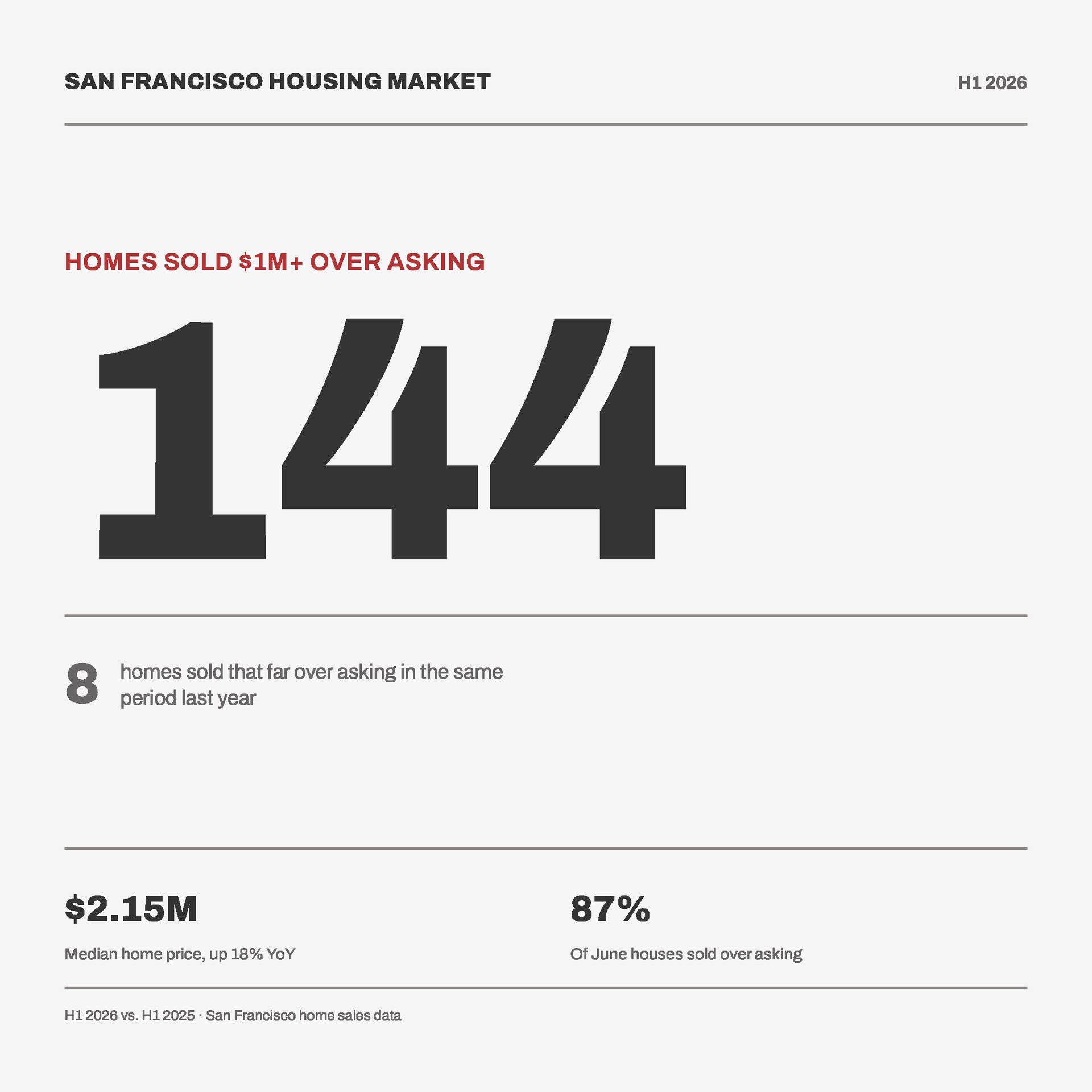
San Francisco's overall median home price hit a record $2.15 million in March, up 18% year over year and $100,000 above the previous peak set in April 2022. Condo prices are up nearly 30% year over year, though still slightly below their 2022 high.
The luxury tier is where the surge is most dramatic. Twenty-two houses sold for more than $5 million in March, a new monthly record. Twenty-four luxury condos sold for more than $3 million, nearly four times the number sold in March 2025.
Over-asking sales have exploded across the board. In the first half of 2026, 144 San Francisco homes sold for at least $1 million over asking, compared with just 8 homes in the same period the year before. In June alone, 87% of houses sold over asking at an average of 127.5% of list price.
Where the Money Is Actually Coming From
This is not a broad economic trend, it is a concentrated liquidity event. Reporting has tied the surge directly to AI companies including OpenAI and Anthropic, both headquartered in the city, along with the wider AI hiring and investment boom. More than 600 current and former OpenAI employees reportedly sold a combined $6.6 billion in shares in a single month last fall, with dozens of individuals hitting eight-figure payouts.
Analysts covering the trend describe it as a compensation story disguised as a real estate story. Rising home prices are becoming a genuine factor in relocation decisions and hiring costs for tech companies competing for talent in the Bay Area.
The pattern is showing up in a shrinking pool of the most desirable homes. Agents describe intense, targeted competition for view properties and prime locations, with newly arrived high earners willing to take whatever is available rather than wait for something better.
Bubble or Correction? Agents Are Split
This is the real debate inside the industry right now, and it does not have a clean answer.
The case for "long overdue correction." Many local agents argue San Francisco spent five years underpriced relative to its fundamentals, following a pandemic-era downturn that hit the city harder than almost any other major metro. From that view, current prices are simply the market catching up to where it should have been all along, not inflating beyond reason.
The case for "AI bubble." Skeptics point out that this wealth is built on the valuations of AI companies that have not yet gone public and have not yet proven durable profitability. If AI investment cools or a handful of companies stumble, the equity fueling these home purchases could evaporate quickly, leaving prices to correct sharply. Even appraisers are struggling to keep pace with how fast the market is moving, which some see as a warning sign rather than a strength.
Both camps agree on one thing: this is not the broad-based, credit-fueled bubble of the mid-2000s. It is a narrow, wealth-concentrated surge tied to a specific industry, which makes it harder to predict and, potentially, faster to unwind if sentiment shifts.
What This Means for You
If you own property in San Francisco right now, this is a good moment to understand what has happened to your equity. If you are considering buying, the window to act before prices climb further may be shorter than it feels, but it is worth going in with eyes open about where this wealth is coming from and how concentrated it is. And if you are selling, especially at the high end, current conditions are about as favorable as they have been in years.
Whichever side of the bubble debate proves right, one thing is clear: AI wealth has already reshaped San Francisco real estate, and the effects are not theoretical anymore. They are showing up in comps.